Understanding Fiscal Federalism, Debt Financing and Public Spending in FY2025–26
Every year, Pakistan’s federal and provincial governments announce budgets outlining how public resources will be collected, distributed and spent. While the budget often attracts attention for changes in taxes and development allocations, it also provides important insights into the country’s fiscal priorities, debt obligations and intergovernmental financial arrangements. The federal government is responsible for collecting most major taxes, after which a substantial portion of revenues is transferred to provinces under the National Finance Commission (NFC) Award. The remaining revenues finance defence, debt servicing, pensions, development projects and other federal responsibilities.
Pakistan continues to face the challenge of balancing growing expenditure commitments with limited revenue generation. Rising debt servicing costs, increasing pension liabilities and fiscal deficits have significantly constrained fiscal space, making efficient resource allocation more important than ever.
Breakdown of Federal Revenues Allocated to Provinces in Pakistan (2025–26)
NFC Award Breakdown 2025-26
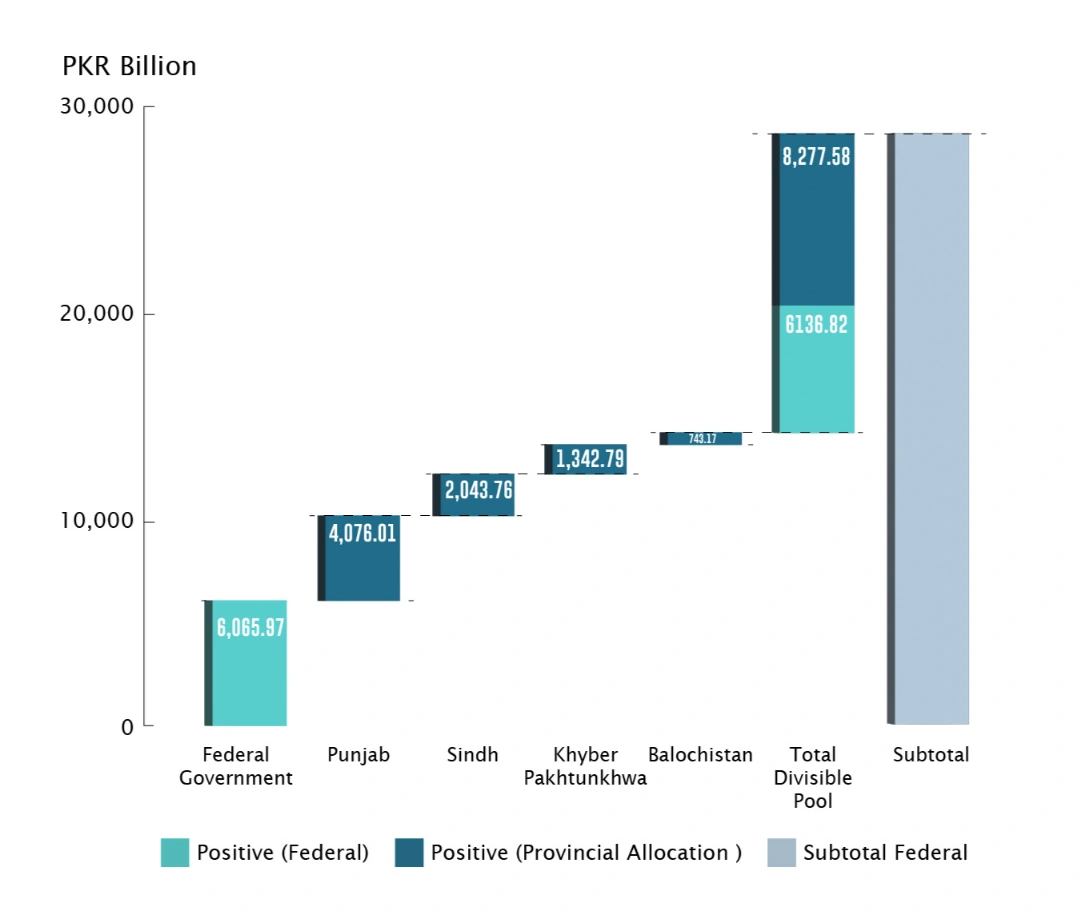
Pakistan’s fiscal federal system is primarily governed through the National Finance Commission (NFC) Award, which determines the distribution of federally collected divisible taxes among the provinces. Under the current arrangement, provinces continue to receive the majority share of the divisible pool, reflecting the constitutional devolution of responsibilities following the 18th Constitutional Amendment. Punjab receives the largest allocation owing to its population size, followed by Sindh, Khyber Pakhtunkhwa and Balochistan. These transfers enable provincial governments to finance essential public services, including education, healthcare, agriculture and local infrastructure. Meanwhile, the federal government retains a comparatively smaller share of divisible revenues to finance national defence, debt servicing, pensions and federal development expenditures.
Pakistan’s Fiscal Deficit Financing Composition and Fiscal Deficit
Domestic vs. Foreign Financing (%)
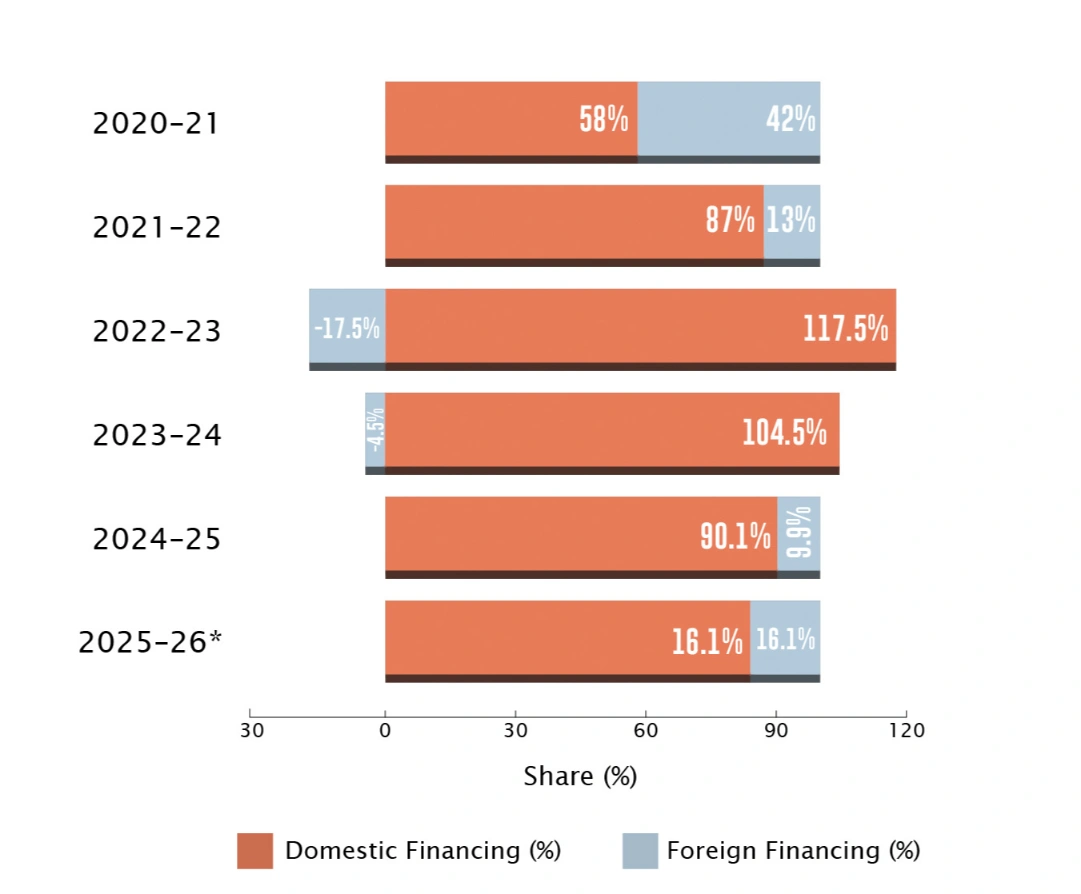
Pakistan has consistently financed fiscal deficits through a combination of domestic and external borrowing. Although the overall fiscal deficit has gradually narrowed in recent years due to fiscal consolidation measures under the IMF-supported reform programme, financing requirements remain substantial. Domestic borrowing continues to account for the majority of deficit financing because of limited access to international capital markets and high external financing costs. Fiscal sustainability will depend on broadening the tax base, improving revenue mobilisation and controlling recurrent expenditure while maintaining adequate investment in development projects.
Share of Central Bank Loans in the Stock of Central Government Debt
SBP Funding vs. Other Funding (%)
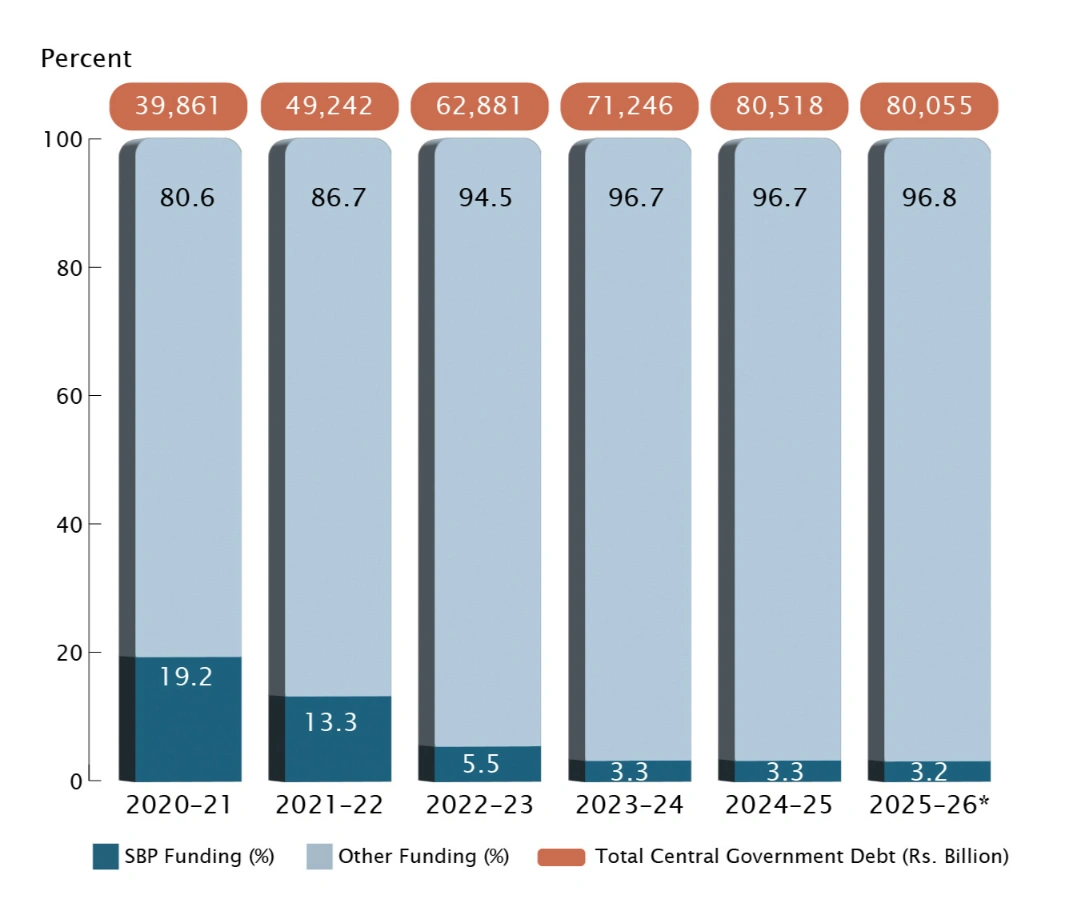
Pakistan has significantly reduced direct borrowing from the State Bank of Pakistan over the past several years. This shift reflects reforms aimed at strengthening central bank independence and reducing inflationary financing. Government borrowing has increasingly shifted towards commercial banks and market-based debt instruments, reducing reliance on monetary financing. Maintaining limited central bank financing helps improve monetary discipline, supports inflation control and enhances investor confidence in fiscal management.
Components of Pakistan’s Federal Budget, FY2025–26
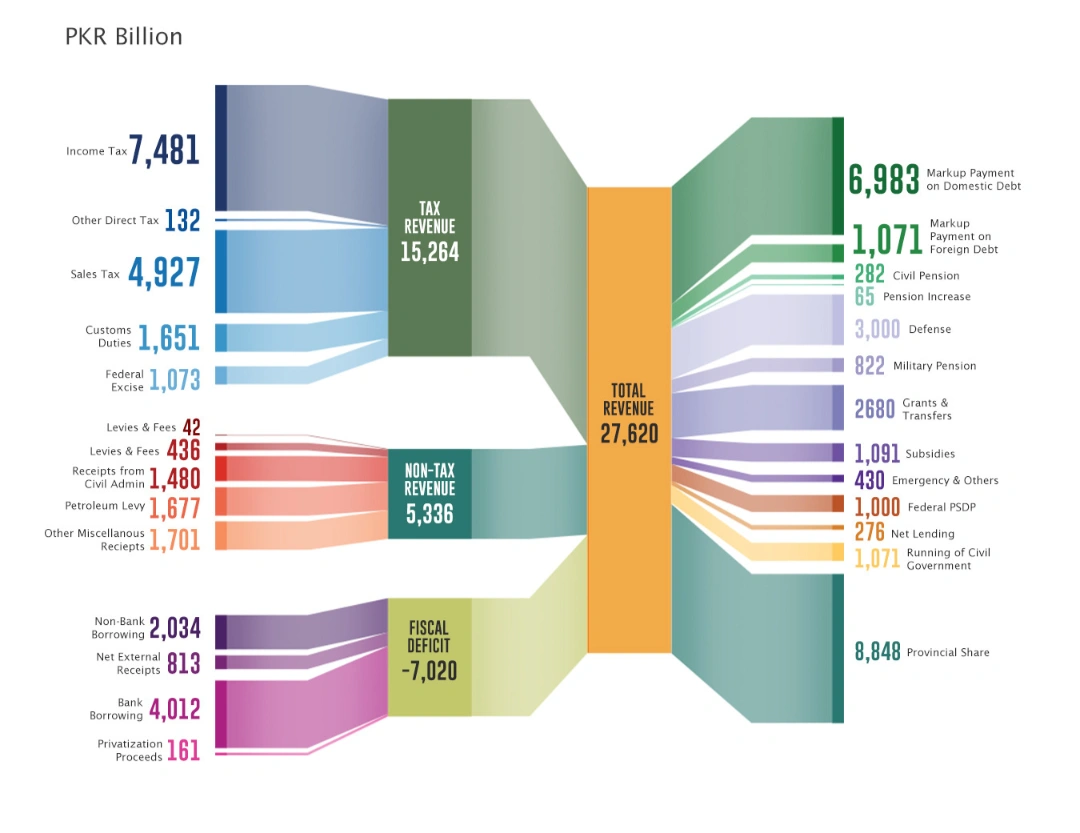
Federal Budget Overview
Pakistan’s FY2025–26 federal budget illustrates the considerable fiscal pressures facing the government. Debt servicing remains the single largest expenditure item, consuming a significant share of total revenues. Combined with principal repayments, debt obligations substantially reduce fiscal space available for development spending. Defence, pensions and current expenditure also account for major portions of the budget. Consequently, the government continues to rely on borrowing to finance the fiscal deficit. Sustainable fiscal management will require higher revenue mobilisation, improved tax compliance and continued expenditure rationalisation to reduce dependence on debt financing.
Breakdown of Provincial Budgets in Pakistan, FY2025–26
Current vs. Development Spending (%)
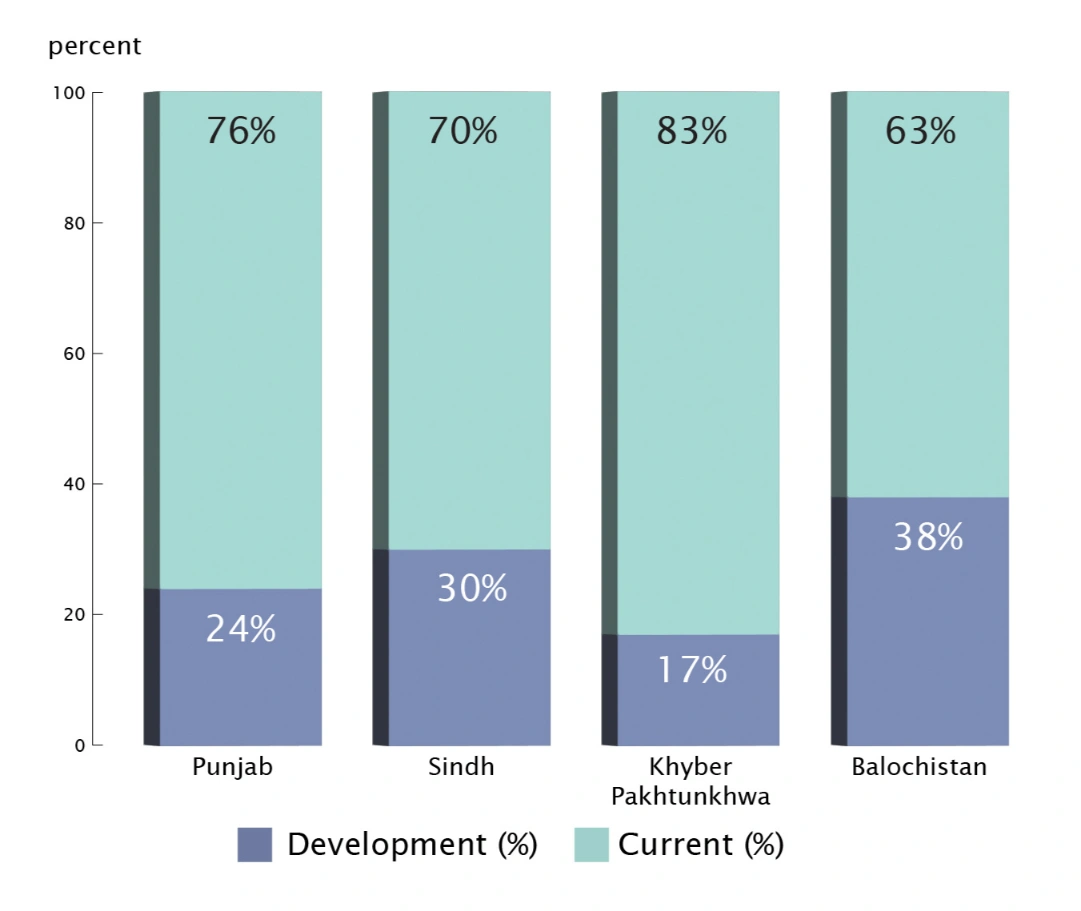
Provincial governments allocate the majority of their budgets towards current expenditure, including salaries, pensions, operational expenses and public service delivery. Development expenditure remains comparatively smaller, although considerable variation exists across provinces. Balochistan allocates the highest proportion of its budget towards development, reflecting ongoing infrastructure needs, while Khyber Pakhtunkhwa devotes the largest share to current expenditure. Increasing development spending remains essential for improving public infrastructure, expanding service delivery and promoting long-term economic growth.
City Budgets for Karachi
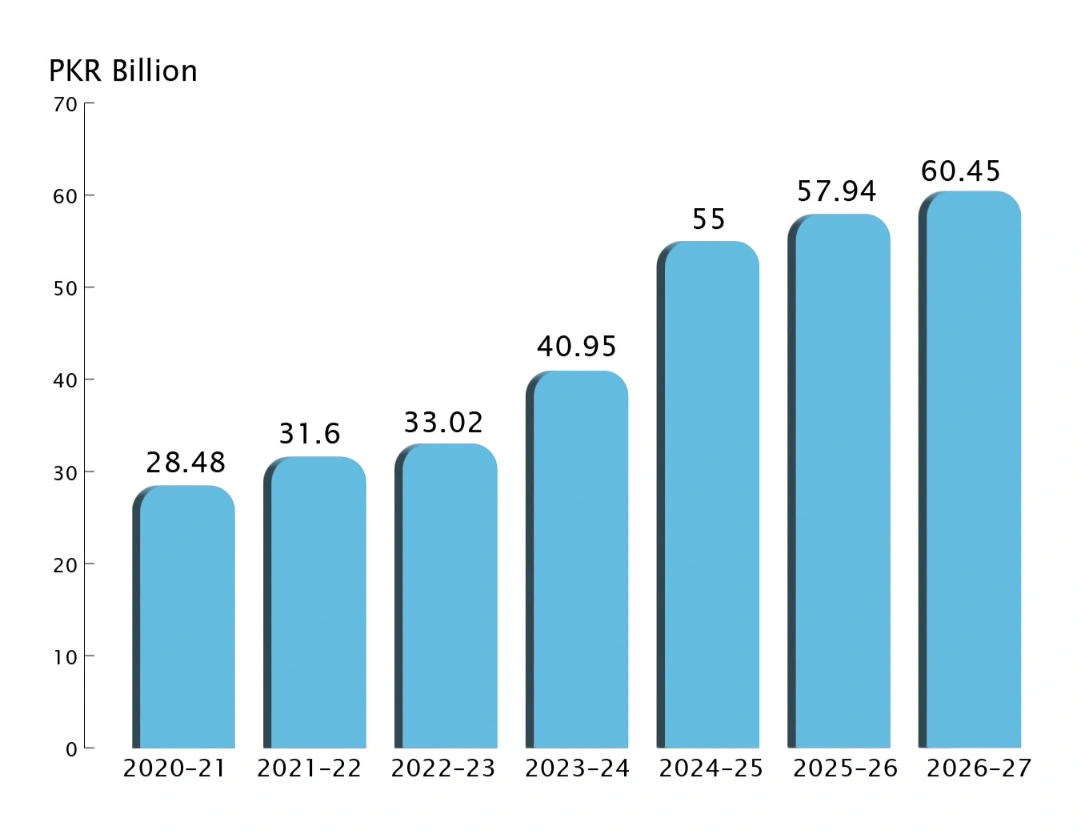
Karachi’s municipal budget has increased steadily over recent years, reflecting rising expenditure requirements associated with Pakistan’s largest metropolitan area. Higher allocations support investments in municipal services, sanitation, road maintenance, waste management and urban infrastructure. Despite the upward trend in budgetary allocations, the city’s rapidly expanding population and infrastructure demands continue to place significant pressure on available resources. Strengthening local government finances and improving budget execution remain critical for enhancing urban service delivery and supporting sustainable urban development.
Pakistan’s FY2025–26 fiscal framework highlights the ongoing challenge of balancing constitutional revenue sharing with mounting expenditure obligations. While provinces receive the majority of divisible tax revenues under the NFC Award to fulfil devolved responsibilities, the federal government continues to shoulder substantial commitments related to debt servicing, defence and pensions. Continued fiscal reforms aimed at broadening the tax base, improving expenditure efficiency and strengthening intergovernmental fiscal coordination will be essential for enhancing fiscal sustainability, supporting economic growth and ensuring effective delivery of public services across all levels of government.
Original Author, ‘Faiz Ahmed’, analysis from the archive of Macro Pakistani.
Updated in 2026 by Macro Pakistani’s Content Research Associate, Hafsa Ghazali.