Understanding Structural Challenges, Productivity Gaps and the Future of Pakistan’s Agricultural Sector
Agriculture remains one of Pakistan’s most important economic sectors, contributing nearly one-fifth of national GDP while supporting rural livelihoods, ensuring food security and supplying raw materials to the country’s manufacturing industries. The sector employs approximately 37% of the labour force and remains central to exports through cotton, rice, fruits and livestock products. Despite its importance, agricultural growth has remained volatile over the past two decades. Productivity improvements have been modest, crop yields continue to lag behind international benchmarks, and structural issues such as fragmented landholdings, inadequate mechanisation, water scarcity, weak research and development, and climate change have constrained long-term growth.
Recent years have highlighted both the resilience and vulnerability of Pakistan’s agricultural economy. While the livestock sector has consistently expanded and become the dominant contributor to agricultural value added, important crops including cotton and wheat have experienced considerable fluctuations due to floods, pest attacks, changing weather patterns and declining productivity. Sustainable agricultural growth will require structural reforms focused on technology adoption, investment in research, efficient water management and improved farm consolidation.
Agriculture Sector Contribution to GDP by Sub-Sectors
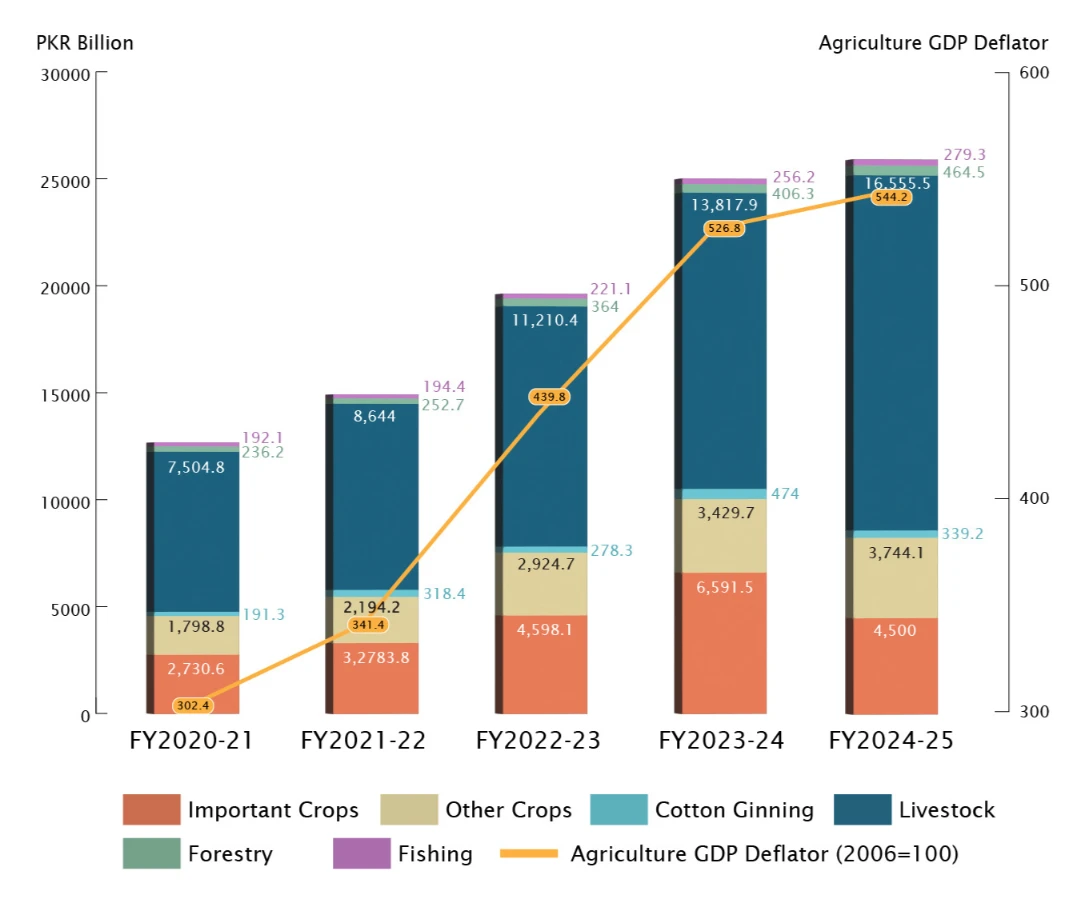
Pakistan’s agricultural sector has become increasingly dependent on livestock, which now accounts for the largest share of agricultural value added. Livestock has shown uninterrupted growth throughout the period, rising from PKR 7.5 trillion in FY2020–21 to over PKR 16.5 trillion in FY2024–25. By contrast, the performance of important crops has remained volatile. After recording exceptional growth in FY2023–24 following recovery from the 2022 floods, important crop output declined sharply in FY2024–25 because of lower production of wheat, cotton and maize. The steady expansion of livestock reflects growing domestic demand for dairy and meat products, while fluctuations in crop production underline Pakistan’s continued exposure to climate shocks, water shortages and declining productivity. Diversifying agricultural growth while improving crop resilience remains a major policy priority.
Share of Area Under Cultivation by Major Crops
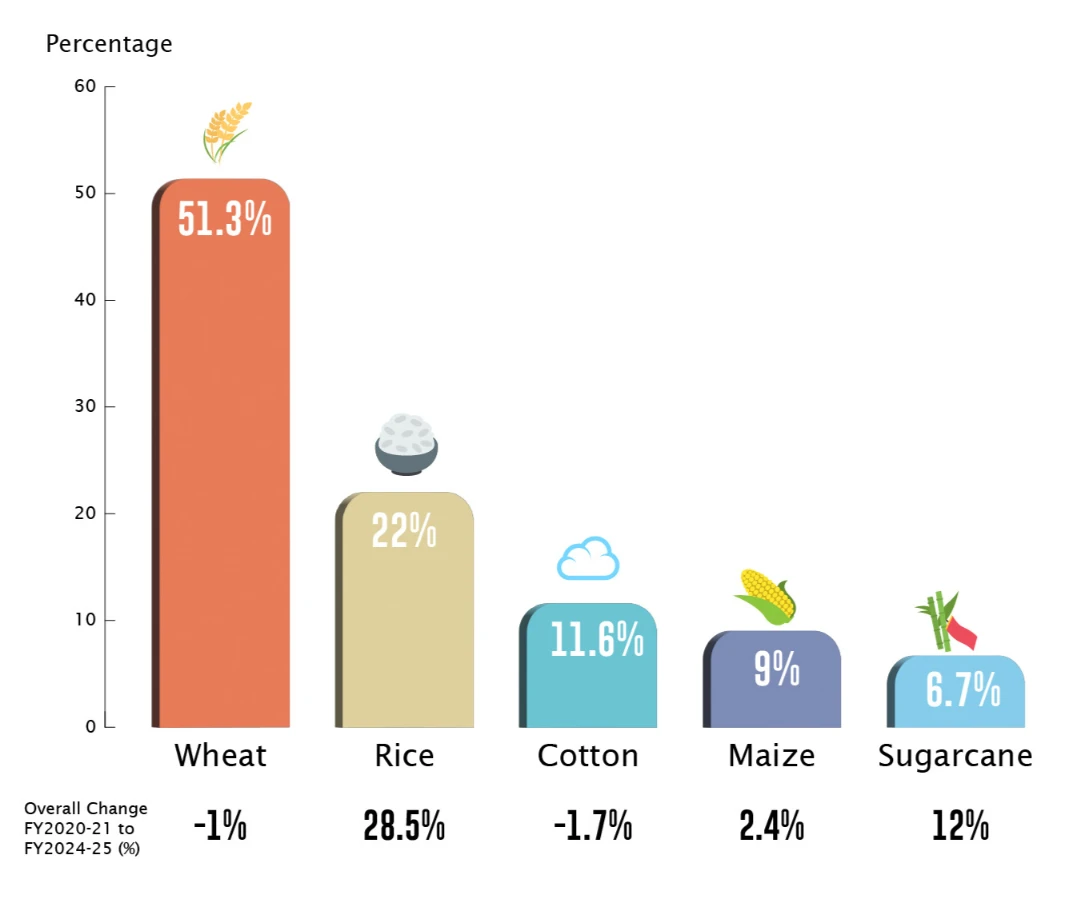
Pakistan’s cropping pattern has undergone gradual changes during the past five years. Wheat continues to occupy more than half of the cultivated area devoted to major crops, reflecting its importance for national food security. Rice cultivation has expanded significantly, supported by stronger export demand and relatively favourable prices. Sugarcane acreage has also increased despite its high water requirements, raising concerns regarding efficient water allocation. Conversely, cotton cultivation has continued to decline because of pest infestations, rising production costs, climate variability and lower profitability compared with competing crops. The continued reduction in cotton cultivation presents challenges for Pakistan’s textile industry, which increasingly depends on imported raw cotton. Future agricultural policy must balance food security, export competitiveness and sustainable resource management.
Pakistan Crop Yield Comparison with Global Average
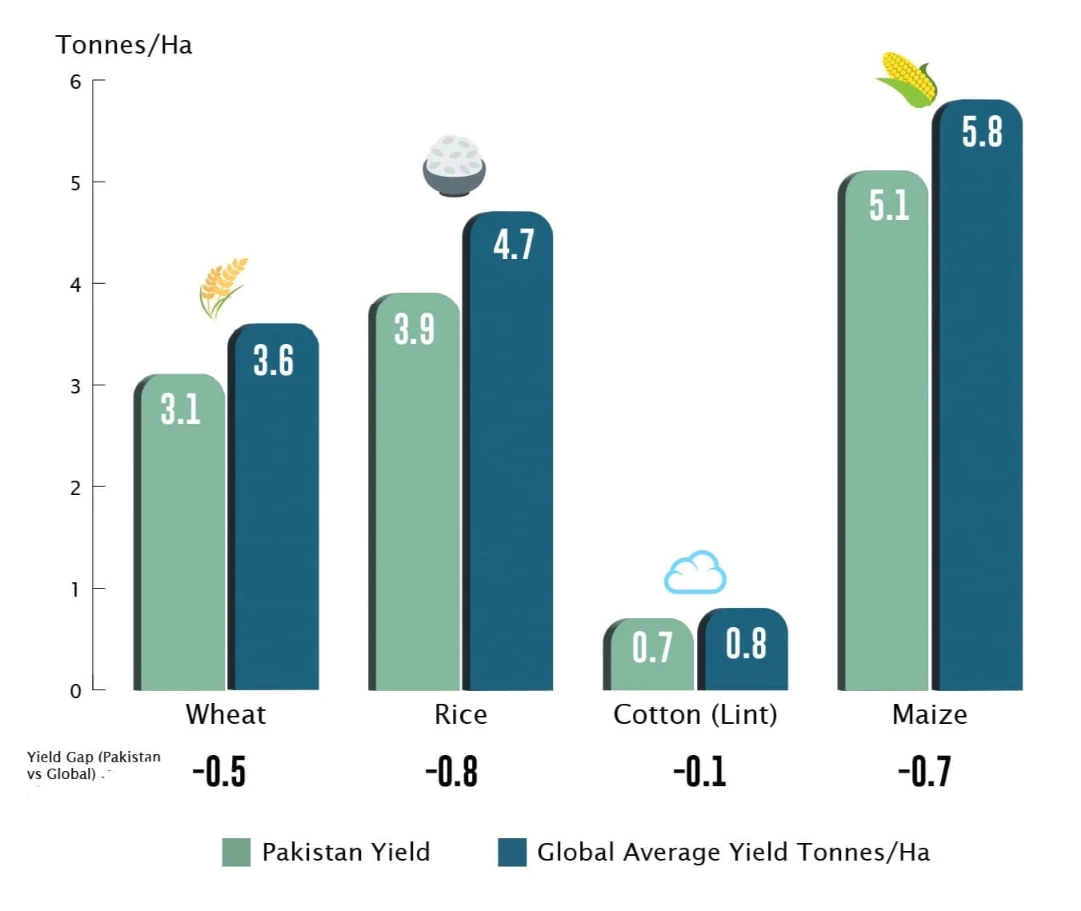
Although Pakistan has narrowed yield gaps in several crops compared with previous decades, agricultural productivity still trails global averages across all major commodities. Rice and maize exhibit the largest productivity shortfalls, while wheat yields also remain below international benchmarks. Cotton productivity continues to be constrained by low-quality seed varieties, pest attacks and climate-related stresses. These yield gaps indicate that significant gains can still be achieved through improved seed technology, mechanisation, precision agriculture, better irrigation practices and enhanced agricultural extension services. Closing even a portion of these productivity gaps could substantially increase farm incomes, improve food security and strengthen agricultural exports without requiring additional cultivated land.
Number of Farms by Size: Pakistan vs Global Benchmark
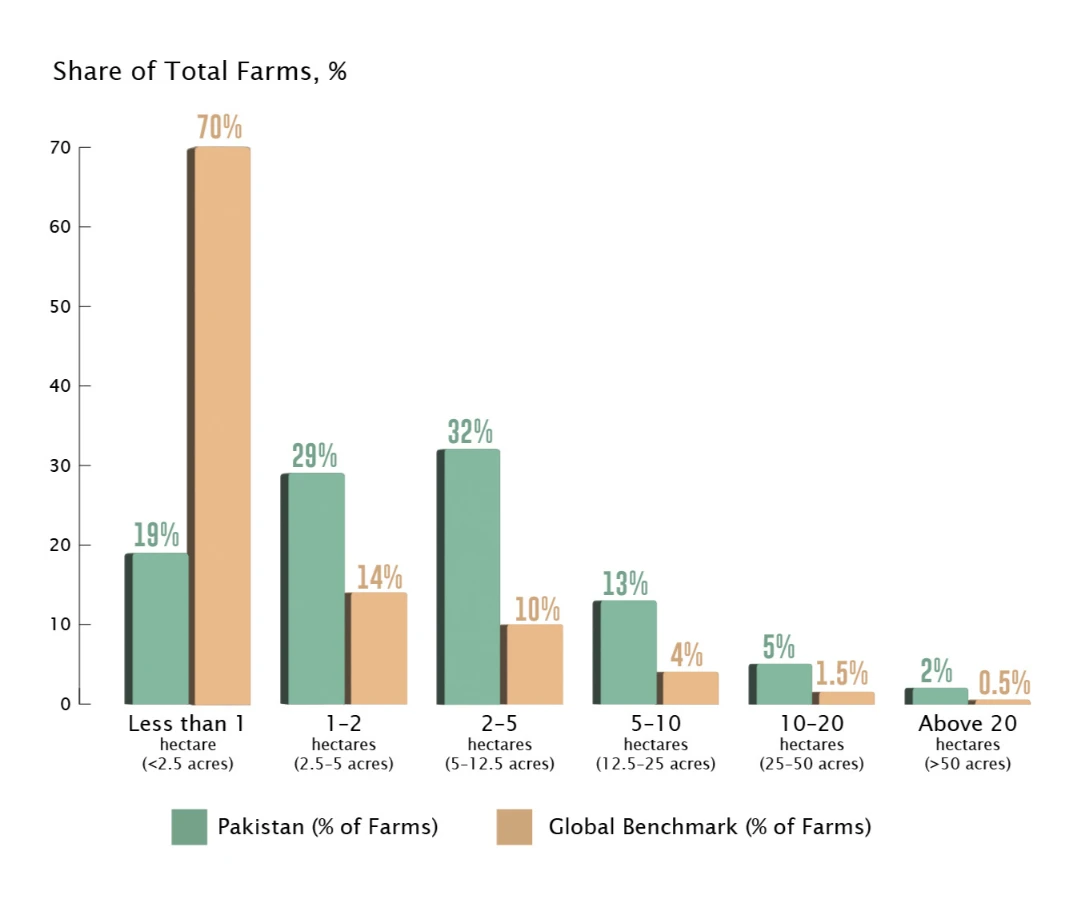
Pakistan’s agricultural landscape is characterised by fragmented landholdings, with approximately four-fifths of farms operating on less than five hectares. While the country has relatively larger average farm sizes than many Asian economies, holdings remain too small to fully exploit economies of scale or encourage widespread mechanisation. Fragmentation increases production costs, reduces investment incentives and limits access to modern technologies, credit and crop insurance. International experience particularly from China demonstrates that improved land consolidation, secure land rights and cooperative farming arrangements can significantly raise productivity. Strengthening land markets and facilitating efficient farm consolidation could therefore play a key role in modernising Pakistan’s agricultural sector.
Pakistan’s agricultural sector possesses significant untapped potential but continues to face structural constraints that have limited productivity growth over several decades. Livestock has emerged as the primary driver of agricultural expansion, while crop production remains vulnerable to climate change, water scarcity and declining efficiency. Persistent productivity gaps relative to global benchmarks highlight the need for greater investment in agricultural research, improved seed technology, mechanisation, digital farming and modern irrigation systems. At the same time, reforms aimed at improving land consolidation, strengthening extension services and expanding access to agricultural finance will be critical for enhancing competitiveness. As Pakistan seeks to ensure food security, increase exports and support rural incomes, improving agricultural productivity must become a central pillar of long-term economic policy.
Original Author, ‘Faiz Ahmed’, analysis from the archive of Macro Pakistani.
Updated in 2026 by Macro Pakistani’s Content Research Associate, Hafsa Ghazali.