A government’s ability to finance public services, invest in infrastructure, and maintain macroeconomic stability depends on the strength of its revenue system. In Pakistan, public finances continue to face structural challenges stemming from a narrow tax base, high dependence on indirect taxation, widespread informality and rising expenditure commitments. Although tax collection has improved considerably in recent years due to administrative reforms and stronger enforcement by the Federal Board of Revenue (FBR), government revenues remain insufficient to finance growing expenditures. Consequently, Pakistan continues to operate with sizable fiscal deficits that require substantial domestic and external borrowing.
An Assessment of Government Revenue, Taxation and Fiscal Management (FY2025–26)
The Pakistan Economic Survey 2025–26 highlights encouraging progress in tax mobilisation, particularly during FY2024–25, when tax revenues reached their highest level relative to GDP in more than two decades. However, debt servicing, pension obligations and development needs continue to exert significant pressure on public finances.
Performance of Government Revenue, Expenditure, and Budget Deficit in Pakistan
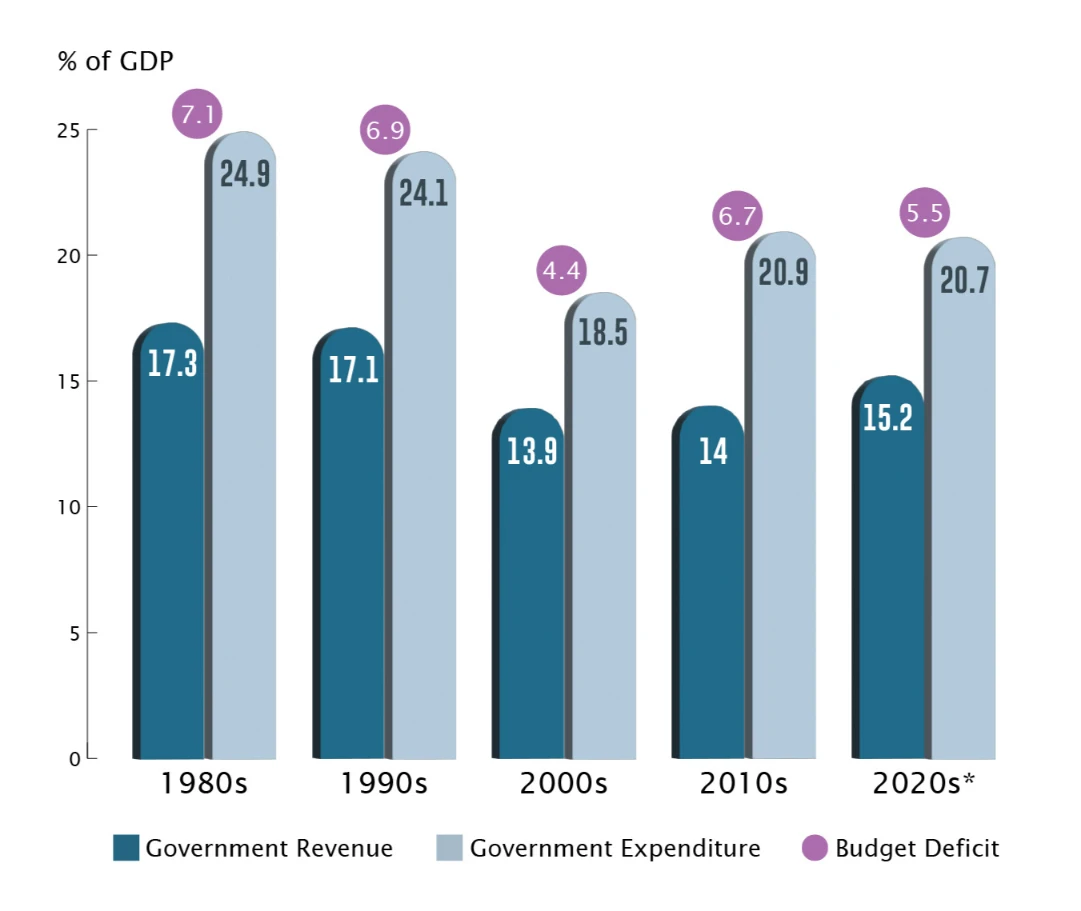
Pakistan’s fiscal history reflects a persistent imbalance between government revenues and expenditures. While government spending has gradually declined as a share of GDP compared with the 1980s, revenues have fallen even more sharply over time, resulting in recurring fiscal deficits. The average fiscal deficit has remained above 5 percent of GDP for most decades, necessitating continuous borrowing. The improvement recorded during the 2020s reflects stronger tax collection, fiscal consolidation measures and reforms under IMF-supported programmes. Nevertheless, revenue mobilisation remains below the level required to sustainably finance public expenditure.
Total Government Revenue in Pakistan
Tax Revenue and Non-Tax Revenue (PKR Billion)
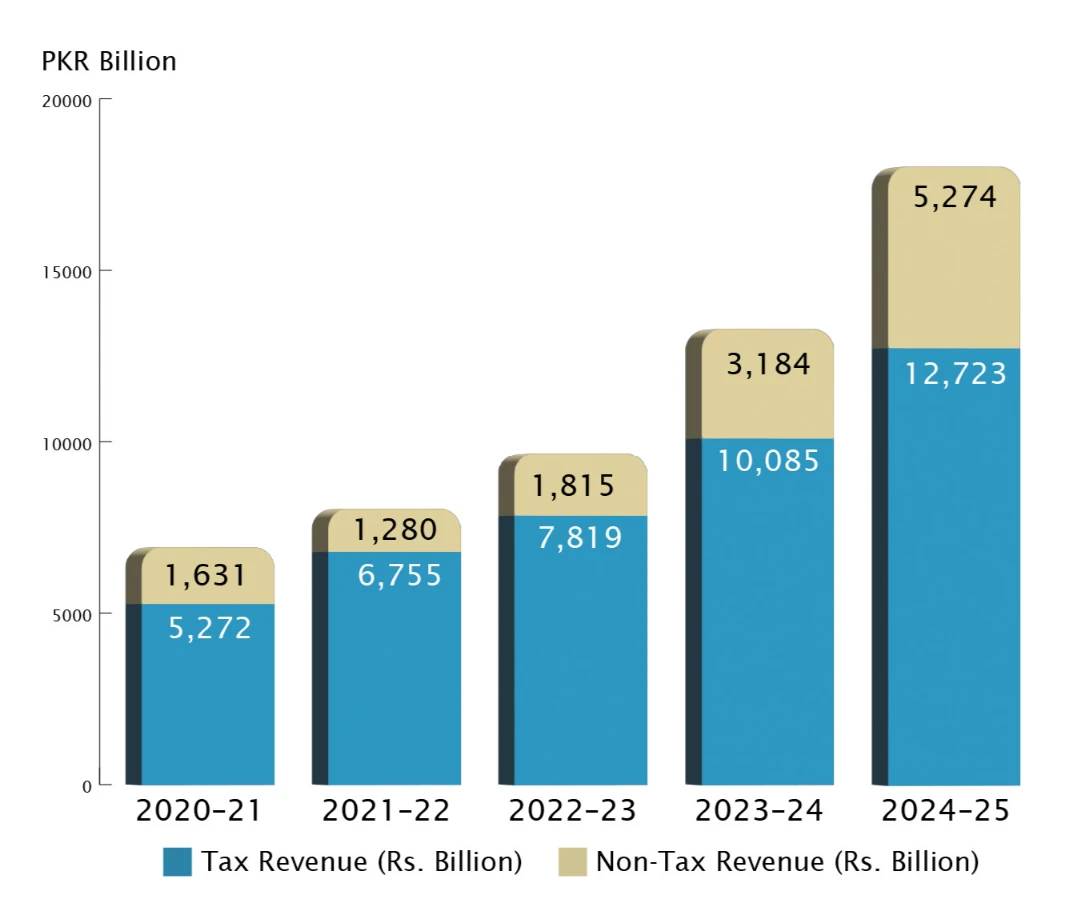
Pakistan’s revenue performance has improved substantially over the past five years. Total government revenues increased from PKR 6.9 trillion in FY2020–21 to nearly PKR 18 trillion in FY2024–25. Tax revenue growth has been driven by stronger FBR collections, inflation-induced nominal growth, improved compliance and expanded documentation efforts. Non-tax revenues also increased significantly owing to higher State Bank profits, petroleum levy collections and returns from public enterprises. Despite these improvements, Pakistan’s overall tax-to-GDP ratio remains modest compared with many emerging economies, highlighting the need for continued tax reforms and a broader revenue base.
Tax-to-GDP Ratio and Fiscal Deficit in Pakistan vs. India
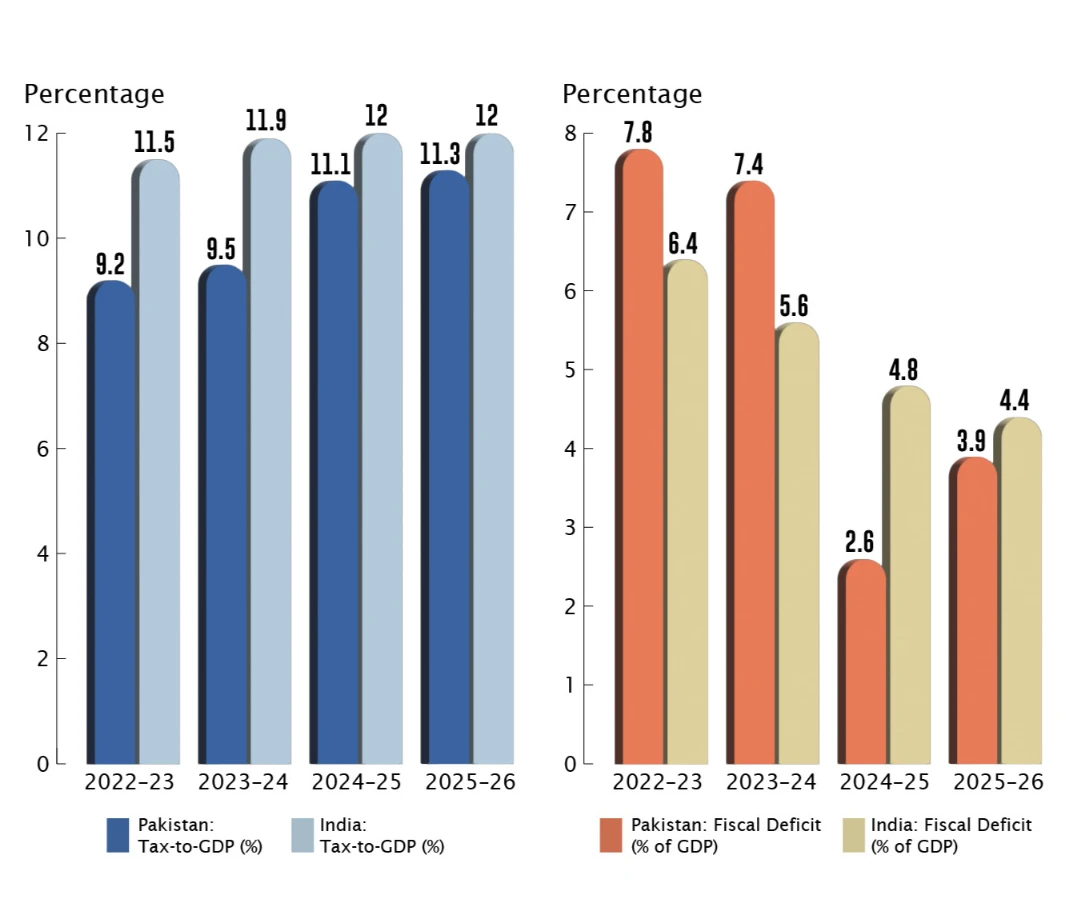
Note: Target/estimate for 2025-26
Pakistan has made meaningful progress in narrowing the gap with India in terms of tax mobilisation. The tax-to-GDP ratio has risen sharply following tax administration reforms and stronger enforcement measures. However, India’s tax ratio remains marginally higher while its fiscal framework has generally maintained greater medium-term discipline. Pakistan’s fiscal deficit is projected to decline considerably compared with previous years due to stronger revenue collection and expenditure rationalisation. Maintaining this trajectory will require sustained improvements in tax compliance, documentation of the informal economy, and prudent fiscal management
Total Federal Tax Revenues by Type in Pakistan
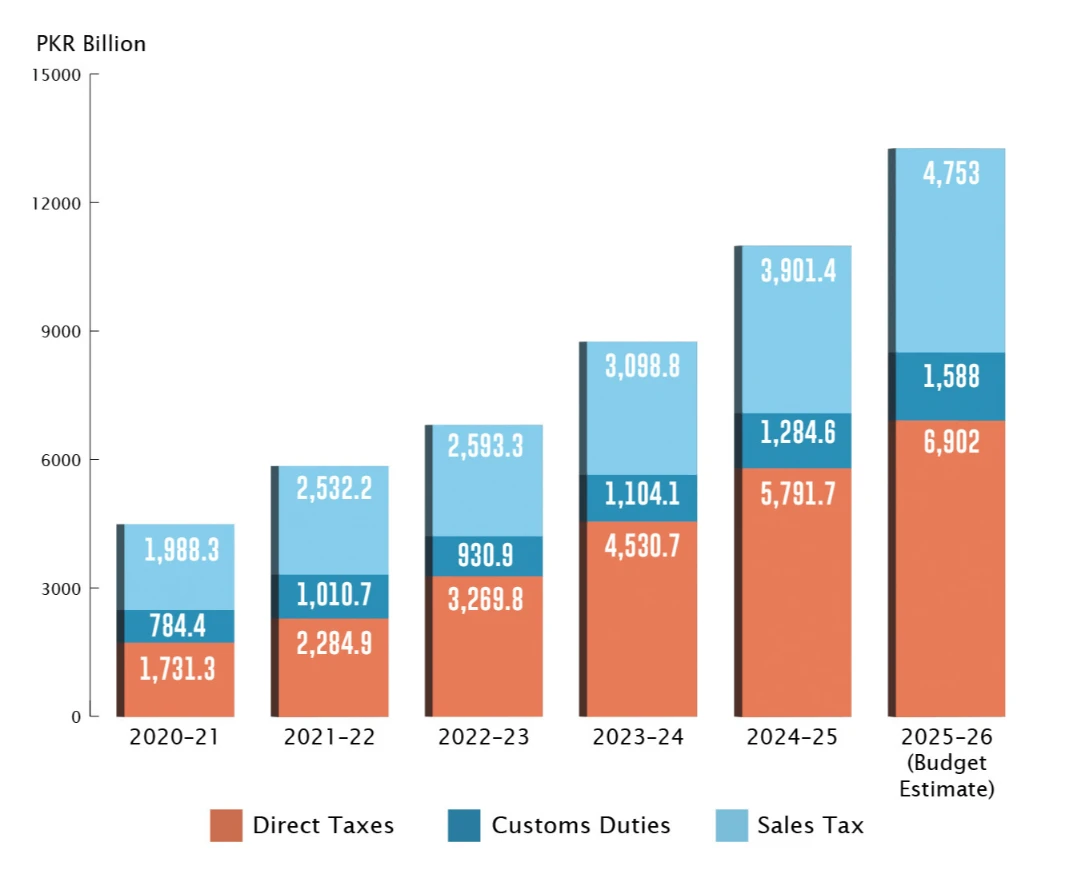
Pakistan’s tax structure has gradually shifted towards greater reliance on direct taxation. Direct tax collections have nearly quadrupled since FY2020–21, reflecting stronger income tax enforcement and improved withholding mechanisms. Although indirect taxes continue to account for approximately half of total tax revenue, their share has declined steadily over recent years. This shift is generally viewed as a positive development because direct taxes tend to be more progressive and equitable. Nevertheless, indirect taxation remains an important source of government revenue, particularly through sales taxes on goods and services.
Registered Electricity Consumers in Pakistan (FY2023–24)
Registered Consumers (Number)
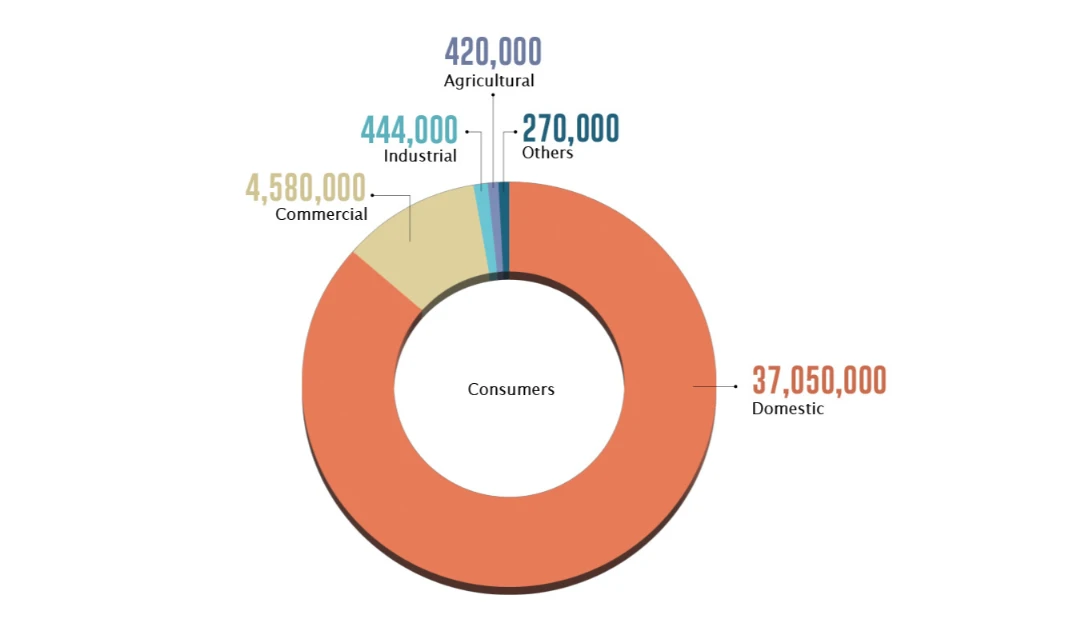
For years, electricity consumption has been seen as a proxy for businesses existing in Pakistan, especially in the absence of formalization. Pakistan’s electricity consumer base remains overwhelmingly dominated by domestic consumers, accounting for the vast majority of registered electricity connections. Commercial and industrial consumers represent a much smaller share despite contributing disproportionately to electricity demand and economic activity. These consumer databases also provide an important opportunity for tax documentation, as electricity usage can help identify businesses operating outside the formal tax system. Improved data integration between utility companies and tax authorities could strengthen compliance and broaden the tax base.
Sectoral Analysis of Share of Direct Taxes vs. Share of GDP in Pakistan
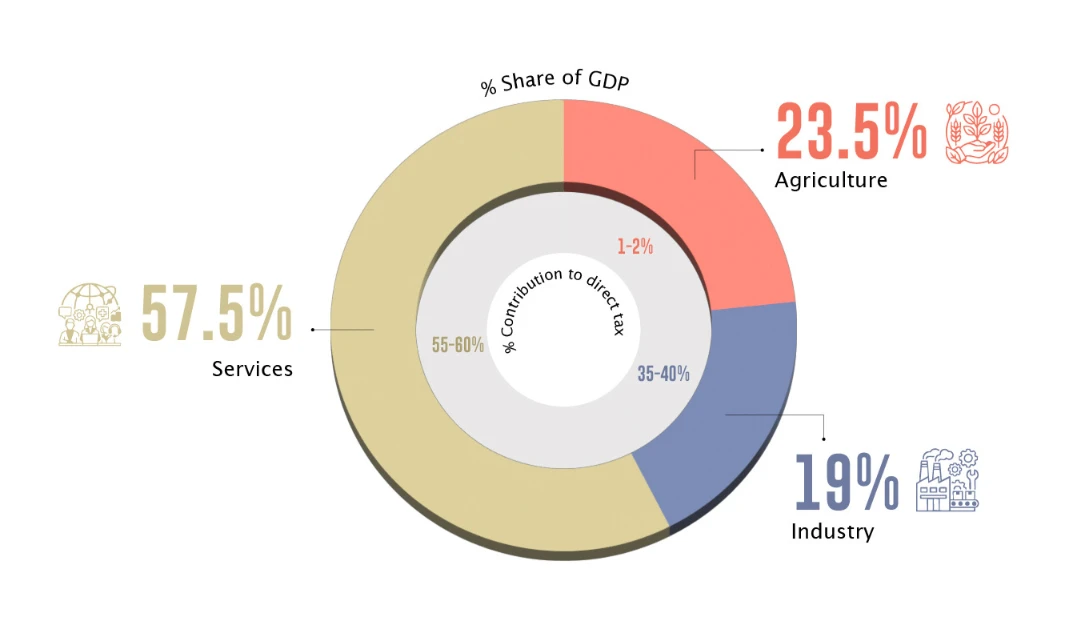
Pakistan’s tax burden remains unevenly distributed across sectors. Agriculture contributes nearly one-quarter of GDP but pays only a negligible share of direct taxes due to exemptions and weak enforcement. By contrast, industry contributes a substantially higher proportion of direct taxes relative to its share in GDP, highlighting the concentration of taxation within the formal manufacturing sector. The services sector contributes taxes broadly in line with its economic size, while trade, retail and real estate remain significantly under-taxed despite their large contribution to national output. Broadening taxation across all sectors remains essential for improving equity and increasing government revenues.
Pakistan’s Tax Expenditure by Type (FY2018–19 to FY2023–24)
Sales Tax vs. Custom Duty vs. Income Tax Expenditure
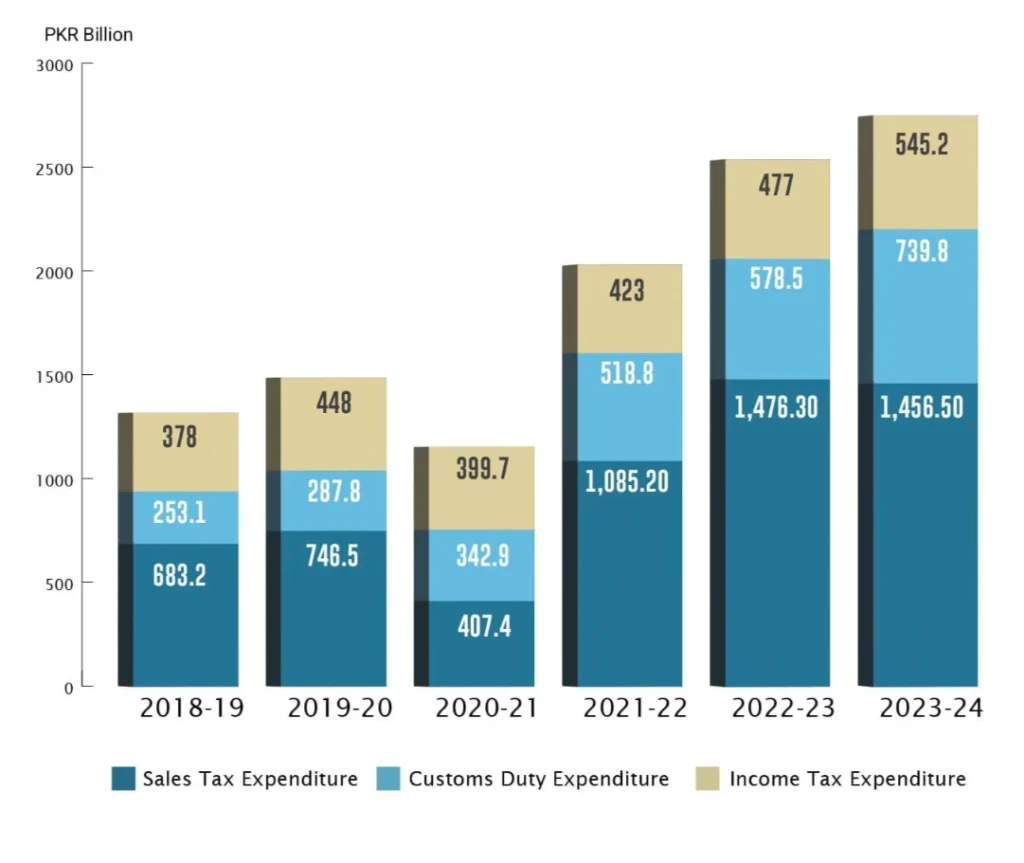
Tax expenditures represent the revenue forgone through exemptions, concessions, reduced tax rates and preferential treatment under Pakistan’s tax system. Sales tax exemptions constitute the largest component of tax expenditure, followed by customs duty concessions and income tax incentives. While many of these incentives are intended to promote investment, exports or social welfare, they also reduce government revenues substantially. Regular evaluation of tax expenditures is therefore essential to ensure that exemptions achieve their intended economic objectives without imposing excessive fiscal costs.
Pakistan has made notable progress in strengthening revenue mobilisation over the past five years, with tax collections reaching record levels and the tax-to-GDP ratio improving significantly. Nevertheless, structural weaknesses including a narrow tax base, widespread informality, extensive tax exemptions and persistent reliance on indirect taxation continue to constrain fiscal performance. Sustainable public finances will require comprehensive tax reforms that expand documentation, improve compliance, rationalise tax expenditures and distribute the tax burden more equitably across sectors. Combined with prudent expenditure management and continued fiscal discipline, these reforms can help reduce budget deficits, limit dependence on borrowing and create greater fiscal space for investment in infrastructure, education, healthcare and other development priorities.
Original Author, ‘Faiz Ahmed’, analysis from the archive of Macro Pakistani.
Updated in 2026 by Macro Pakistani’s Content Research Associate, Hafsa Ghazali.