A quiet fact buried in the paperwork of Pakistan’s distribution companies (DISCOs) privatization deserves more attention than it’s getting: the three companies up for sale aren’t bleeding money.
Profitable DISCOs and the Wider Power Sector Crisis
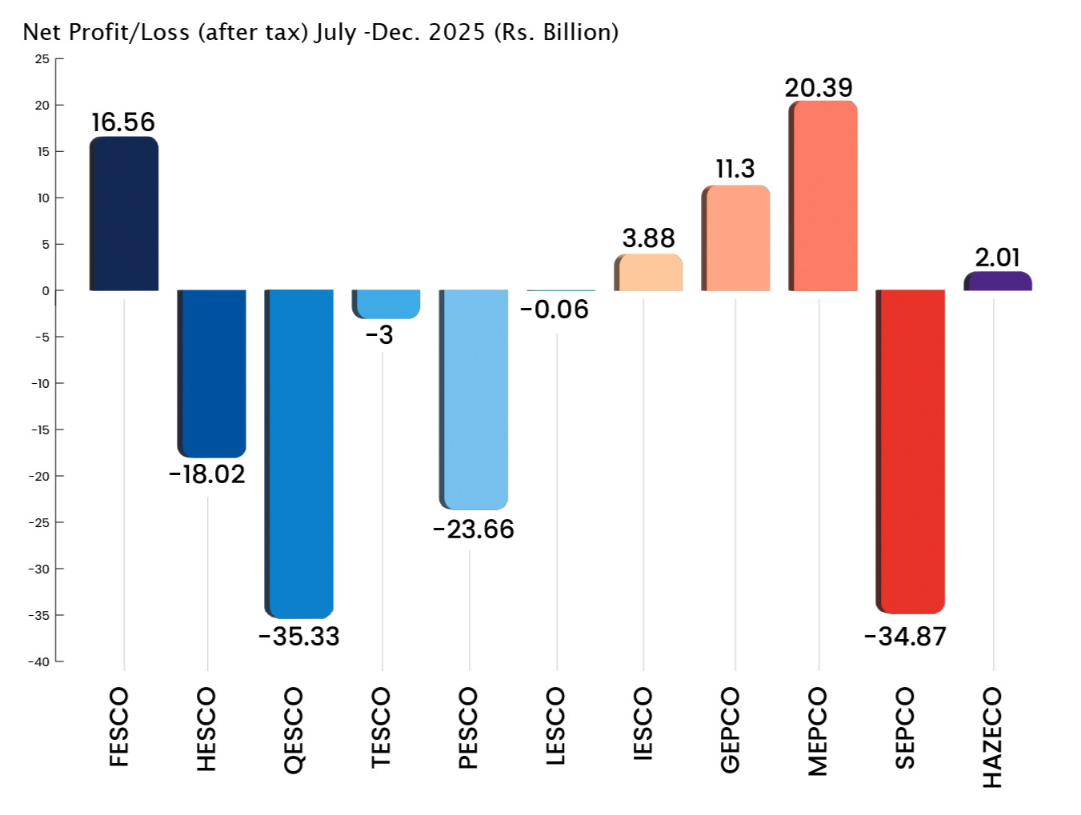
FESCO posted a profit after tax of Rs. 16.6 billion in the first half of FY2026. GEPCO made Rs. 11.3 billion, and IESCO made Rs. 3.9 billion in the same period. Their privatization isn’t a rescue operation. They’re cash-generating public assets being handed to private buyers while the genuinely broken utilities like PESCO, SEPCO, QESCO, HESCO, the ones actually driving Pakistan’s circular debt crisis, stay exactly where they are. Even QESCO is nowhere in the future privatization plans.
Net Profit/Loss After Tax of DISCOs in Pakistan
Core Earnings Before Interest and Taxes (EBIT) of DISCOs in Pakistan
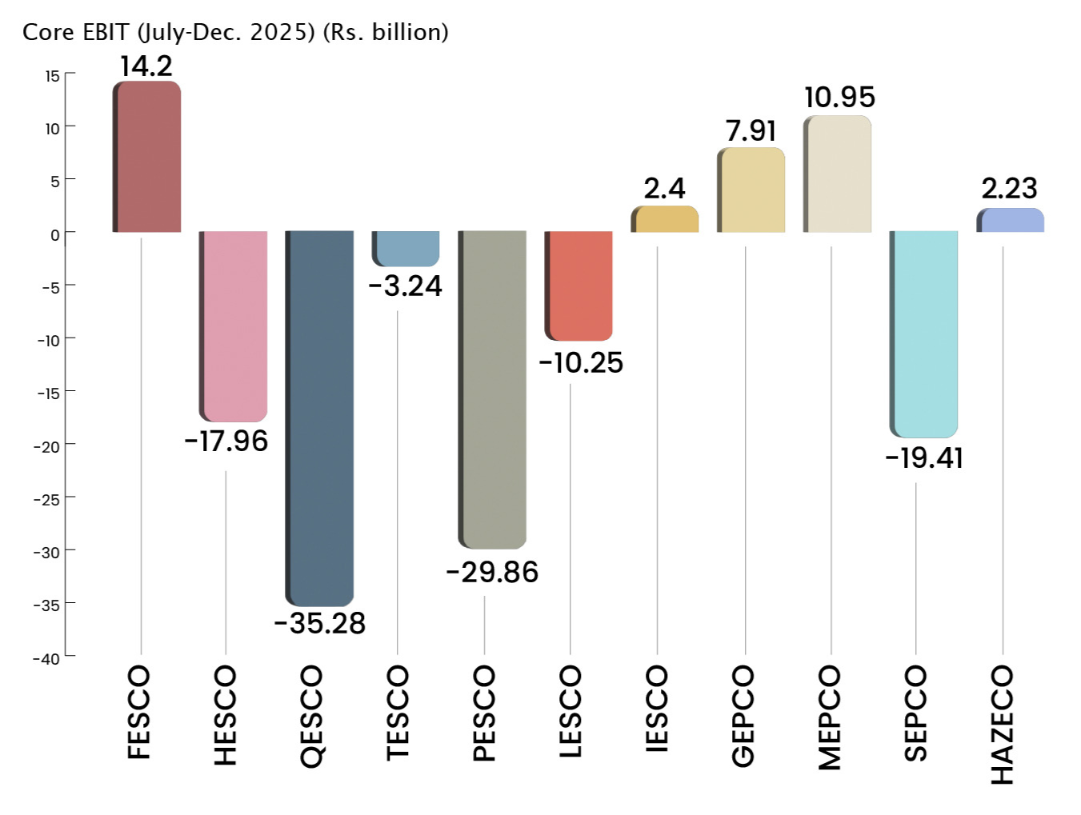
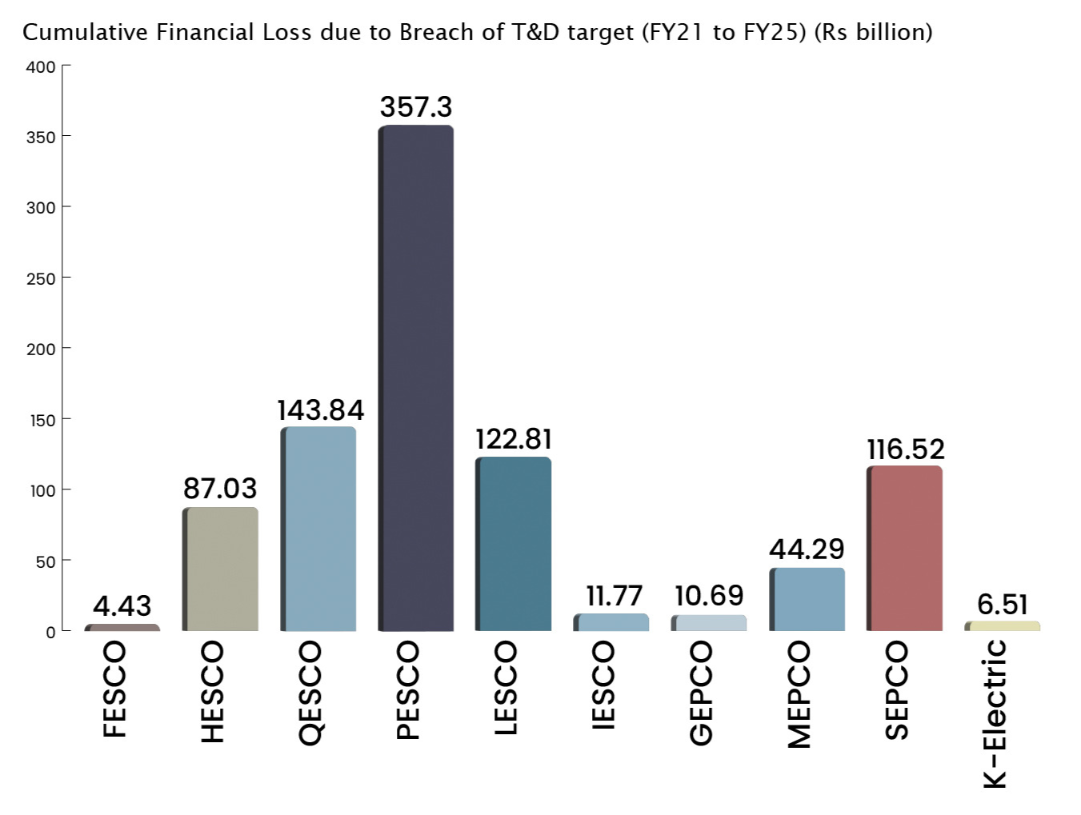
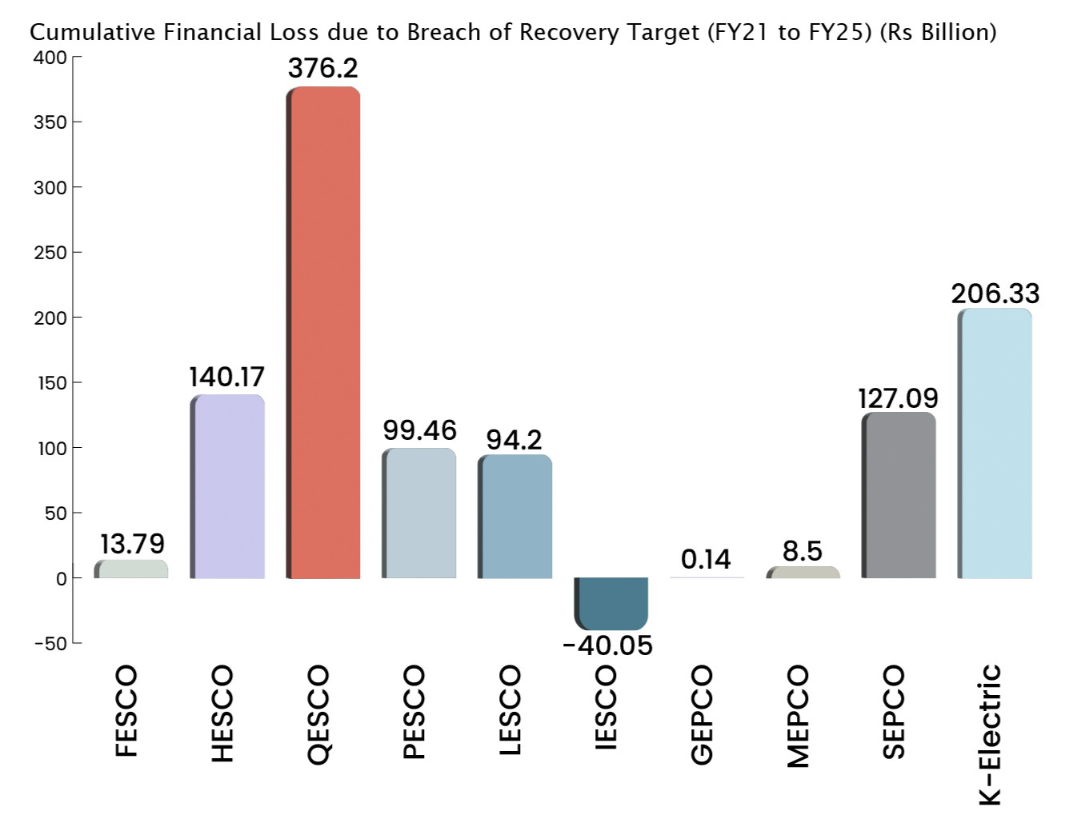
Operationally, FESCO, GEPCO, and IESCO are strong-performing DISCOs, with recovery rates near or above 100%; transmission & distribution losses remained near or below NEPRA targets. Financially, this translated into comparatively minimal losses. IESCO even compensated for other companies’ financial breaches of target, though not reflected equally in its financial statements. IESCO is effectively an operationally healthy engine trapped inside a broken vehicle. It collects cash effectively and keeps electricity theft low but carries the financial weight of national power grid inefficiencies, regulatory delays, and immense legacy liabilities, reflected in its lower profits.
Cumulative Financial Losses (FY21-25)
Receivables as of June, 2025
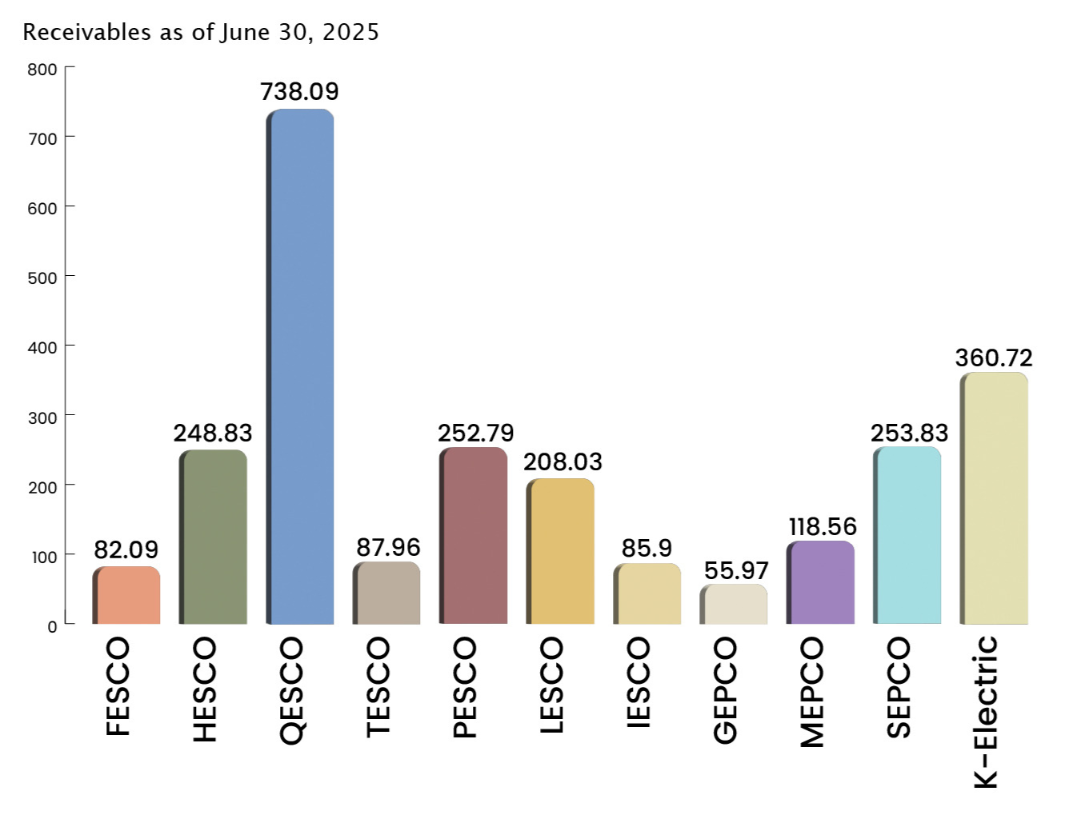
The imbalance in Pakistan’s power sector is striking. The eleven DISCOs collectively hold assets worth Rs. 3.4 trillion. Only five of them – HESCO, SEPCO, QESCO, PESCO, and LESCO – have accumulated losses of Rs. 3.08 trillion in the first half of FY2026. In the same period, the power sector (primarily DISCOs) absorbed 73% of all fiscal support given to loss-making state enterprises. Against numbers that size, selling three already-profitable companies is a rounding error dressed up as sector reform.
Previous Privatization Efforts and Constitutional Challenges
This isn’t Pakistan’s first attempt at privatization. In 2014, the country tried to privatize FESCO, hired a transaction advisor, and advertised bids, but shelved the plan within two years, wasting expenditures. In the past two decades, only two transactions have closed: KAPCO (36% of shares) and K-Electric (75%), despite plans to privatize DISCOs and four generation companies. Current optimism about Batch-I closing by early 2027 should be viewed in light of this history, rather than just recent Expressions of Interest (EOIs).
Beyond this, a federalism issue remains unaddressed. A Senate Sub-Committee on Devolution has ruled that privatizing DISCOs without the Council of Common Interests’ consent violates Articles 154 and 157 of the Constitution, as electricity distribution is a provincial matter. If this concern gains political momentum, courts could annul a signed share-purchase agreement.
The Price of Investor Comfort
Another cautionary tale is happening in real time. While the government markets FESCO, GEPCO and IESCO as attractive, de-risked investments, K-Electric just had NEPRA slash its allowed tariff from Rs. 39.97 to Rs. 32.37 per unit, a 19% cut that KE has told the stock exchange is financially unsustainable. Worse, despite being private for two decades, K-Electric is still regulated like any other state-owned DISCO, and the regulator’s energy has gone into tariff-setting rather than genuinely monitoring a monopoly.
The investors’ demands raise serious concerns about limiting the government’s future options. Their main demand is a 7- to 10-year locked tariff regime, effectively limiting NEPRA’s regulatory capabilities for a decade and protecting against future contract reopenings by the government or courts. Every investor demanding a decade-long tariff lock and protection from contract reopening is pointing at K-Electric’s tariff decision and recent revisions in Independent Power Producer (IPPs) contracts. They also want dollar-linked, inflation-adjusted returns to mitigate rupee depreciation, exemptions from legacy IPPs’ obligations, the ability to purchase multiple DISCOs, and the right for certain bidders to generate and sell power in addition to distributing it.
Each strategy may seem like a good way to manage investor risk, but together they create major problems. For example, returns linked to the dollar could further increase the circular debt. If the rupee loses value, consumer tariffs and government debts will rise. Exempting new owners from past IPP debts shifts the burden to remaining DISCOs and taxpayers. Also, merging generation and distribution rights risks re-creating a structure that Pakistan intentionally broke up in the 1990s, which caused issues during Turkey’s privatization.
The main issue is that the terms for Batch-I investors will set a precedent for Batch-II. Favorable Batch-I terms may hinder the privatization of Batch-II DISCOs that actually need improvement, as the government will have used its strongest leverage.
Efficiency, Equity and the Consumer
Coming back to a question: what kind of efficiency is the government actually buying? If the three DISCOs planned for privatization are already close to their NEPRA targets, privatizing them isn’t about improving operations; it’s only about financial restructuring. The Special Purpose Vehicle strips out land and pension liabilities, the government pockets proceeds from companies that were already profitable, and investors are separately asking for rights to monetize DISCO land for telecom towers, fiber networks, and EV charging.
There’s an equity dimension too. Privatizing the country’s most efficient DISCOs while leaving the underperformers in Baluchistan and Sindh may worsen the regional divide. An overlooked alternative was a gradual stock market listing, allowing institutional investors or consumers themselves to buy in, rather than a quick sale to a single buyer. This approach would have promoted transparency and made citizens shareholders in a sector they mainly experience through their bills. Although Pakistan chose the faster, less transparent route due to fiscal urgency, it’s important to acknowledge that this was just one option.
Moreover, this privatization should be evaluated not only by the sale itself, but by what it delivers afterward. FESCO, IESCO, and GEPCO serve over 14 million consumers. Selling these best performers is not an achievement in itself. Ownership alone has never separated Pakistan from reliable and affordable power. The real challenge is ensuring regulatory reform, tariff restructuring, and stronger enforcement along with the ownership change.
K-Electric’s case shows that private ownership without regulatory teeth produces a private monopoly instead of a public one.
The government aims to protect consumer interests, while investors aim for maximum returns and minimum political risk. These conflicting goals will ultimately shape the final agreements as we move from EOI to binding bids. The outcome will reveal if privatization benefits consumers or just shifts a monopoly to private companies with fixed tariffs that ignore performance.
What the International Record Shows
International experience also shows that privatization is effective when implemented as a package: stronger regulatory capacity, rational tariffs, strict enforcement, and genuine competition, not just a change in ownership. Pakistan’s unresolved uniform tariff, investor pressure to limit regulatory discretion, and absent anti-theft framework echo the risk factors behind Odisha’s reversal and the UK’s recurring backlash more than the conditions that made Delhi’s reform work. Turkey’s experience closely parallels Pakistan’s. Efficiency gains there did not lower retail prices because mechanisms to pass savings to consumers were lacking; privatization failed to address theft in critical areas; and conflicts of interest arose when distributors held stakes in both generation and retail.
A Policy Agenda for Privatization
The arguments presented in this article are not against privatization. It’s about having a transparent privatization policy before privatization. Resolve the K-Electric dispute before promoting Batch-I as de-risked, since every unresolved month undercuts the government’s own pitch.
Fix the uniform tariff to encourage performance instead of maintaining existing distortions. If the government wants to support specific regions (or consumers), it should do so transparently through the budget, without affecting private operators’ balance sheets. Offer investors a predictable regulatory framework shielded from arbitrary political interference, but not profit guarantees placed permanently beyond NEPRA’s review.
The three DISCOs on the table now are the easiest sale Pakistan will ever get in this sector. How it utilizes that leverage, not how quickly it closes the deal, will determine if this is real reform or just a well-dressed transaction.